
Rewrite queue (#24505)
# ⚠️ Breaking
Many deprecated queue config options are removed (actually, they should
have been removed in 1.18/1.19).
If you see the fatal message when starting Gitea: "Please update your
app.ini to remove deprecated config options", please follow the error
messages to remove these options from your app.ini.
Example:
```
2023/05/06 19:39:22 [E] Removed queue option: `[indexer].ISSUE_INDEXER_QUEUE_TYPE`. Use new options in `[queue.issue_indexer]`
2023/05/06 19:39:22 [E] Removed queue option: `[indexer].UPDATE_BUFFER_LEN`. Use new options in `[queue.issue_indexer]`
2023/05/06 19:39:22 [F] Please update your app.ini to remove deprecated config options
```
Many options in `[queue]` are are dropped, including:
`WRAP_IF_NECESSARY`, `MAX_ATTEMPTS`, `TIMEOUT`, `WORKERS`,
`BLOCK_TIMEOUT`, `BOOST_TIMEOUT`, `BOOST_WORKERS`, they can be removed
from app.ini.
# The problem
The old queue package has some legacy problems:
* complexity: I doubt few people could tell how it works.
* maintainability: Too many channels and mutex/cond are mixed together,
too many different structs/interfaces depends each other.
* stability: due to the complexity & maintainability, sometimes there
are strange bugs and difficult to debug, and some code doesn't have test
(indeed some code is difficult to test because a lot of things are mixed
together).
* general applicability: although it is called "queue", its behavior is
not a well-known queue.
* scalability: it doesn't seem easy to make it work with a cluster
without breaking its behaviors.
It came from some very old code to "avoid breaking", however, its
technical debt is too heavy now. It's a good time to introduce a better
"queue" package.
# The new queue package
It keeps using old config and concept as much as possible.
* It only contains two major kinds of concepts:
* The "base queue": channel, levelqueue, redis
* They have the same abstraction, the same interface, and they are
tested by the same testing code.
* The "WokerPoolQueue", it uses the "base queue" to provide "worker
pool" function, calls the "handler" to process the data in the base
queue.
* The new code doesn't do "PushBack"
* Think about a queue with many workers, the "PushBack" can't guarantee
the order for re-queued unhandled items, so in new code it just does
"normal push"
* The new code doesn't do "pause/resume"
* The "pause/resume" was designed to handle some handler's failure: eg:
document indexer (elasticsearch) is down
* If a queue is paused for long time, either the producers blocks or the
new items are dropped.
* The new code doesn't do such "pause/resume" trick, it's not a common
queue's behavior and it doesn't help much.
* If there are unhandled items, the "push" function just blocks for a
few seconds and then re-queue them and retry.
* The new code doesn't do "worker booster"
* Gitea's queue's handlers are light functions, the cost is only the
go-routine, so it doesn't make sense to "boost" them.
* The new code only use "max worker number" to limit the concurrent
workers.
* The new "Push" never blocks forever
* Instead of creating more and more blocking goroutines, return an error
is more friendly to the server and to the end user.
There are more details in code comments: eg: the "Flush" problem, the
strange "code.index" hanging problem, the "immediate" queue problem.
Almost ready for review.
TODO:
* [x] add some necessary comments during review
* [x] add some more tests if necessary
* [x] update documents and config options
* [x] test max worker / active worker
* [x] re-run the CI tasks to see whether any test is flaky
* [x] improve the `handleOldLengthConfiguration` to provide more
friendly messages
* [x] fine tune default config values (eg: length?)
## Code coverage:
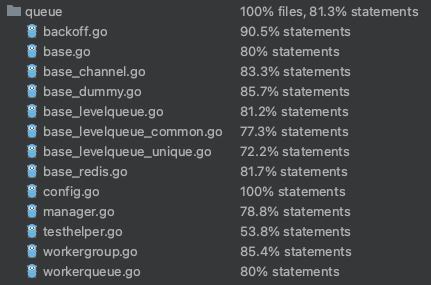
2023-05-08 07:49:59 -04:00
|
|
|
// Copyright 2023 The Gitea Authors. All rights reserved.
|
|
|
|
|
// SPDX-License-Identifier: MIT
|
|
|
|
|
|
|
|
|
|
package queue
|
|
|
|
|
|
|
|
|
|
import (
|
|
|
|
|
"context"
|
|
|
|
|
"errors"
|
|
|
|
|
"sync"
|
|
|
|
|
"time"
|
|
|
|
|
|
2025-03-27 15:40:14 -04:00
|
|
|
"forgejo.org/modules/container"
|
2025-10-30 21:12:36 -04:00
|
|
|
"forgejo.org/modules/log"
|
Rewrite queue (#24505)
# ⚠️ Breaking
Many deprecated queue config options are removed (actually, they should
have been removed in 1.18/1.19).
If you see the fatal message when starting Gitea: "Please update your
app.ini to remove deprecated config options", please follow the error
messages to remove these options from your app.ini.
Example:
```
2023/05/06 19:39:22 [E] Removed queue option: `[indexer].ISSUE_INDEXER_QUEUE_TYPE`. Use new options in `[queue.issue_indexer]`
2023/05/06 19:39:22 [E] Removed queue option: `[indexer].UPDATE_BUFFER_LEN`. Use new options in `[queue.issue_indexer]`
2023/05/06 19:39:22 [F] Please update your app.ini to remove deprecated config options
```
Many options in `[queue]` are are dropped, including:
`WRAP_IF_NECESSARY`, `MAX_ATTEMPTS`, `TIMEOUT`, `WORKERS`,
`BLOCK_TIMEOUT`, `BOOST_TIMEOUT`, `BOOST_WORKERS`, they can be removed
from app.ini.
# The problem
The old queue package has some legacy problems:
* complexity: I doubt few people could tell how it works.
* maintainability: Too many channels and mutex/cond are mixed together,
too many different structs/interfaces depends each other.
* stability: due to the complexity & maintainability, sometimes there
are strange bugs and difficult to debug, and some code doesn't have test
(indeed some code is difficult to test because a lot of things are mixed
together).
* general applicability: although it is called "queue", its behavior is
not a well-known queue.
* scalability: it doesn't seem easy to make it work with a cluster
without breaking its behaviors.
It came from some very old code to "avoid breaking", however, its
technical debt is too heavy now. It's a good time to introduce a better
"queue" package.
# The new queue package
It keeps using old config and concept as much as possible.
* It only contains two major kinds of concepts:
* The "base queue": channel, levelqueue, redis
* They have the same abstraction, the same interface, and they are
tested by the same testing code.
* The "WokerPoolQueue", it uses the "base queue" to provide "worker
pool" function, calls the "handler" to process the data in the base
queue.
* The new code doesn't do "PushBack"
* Think about a queue with many workers, the "PushBack" can't guarantee
the order for re-queued unhandled items, so in new code it just does
"normal push"
* The new code doesn't do "pause/resume"
* The "pause/resume" was designed to handle some handler's failure: eg:
document indexer (elasticsearch) is down
* If a queue is paused for long time, either the producers blocks or the
new items are dropped.
* The new code doesn't do such "pause/resume" trick, it's not a common
queue's behavior and it doesn't help much.
* If there are unhandled items, the "push" function just blocks for a
few seconds and then re-queue them and retry.
* The new code doesn't do "worker booster"
* Gitea's queue's handlers are light functions, the cost is only the
go-routine, so it doesn't make sense to "boost" them.
* The new code only use "max worker number" to limit the concurrent
workers.
* The new "Push" never blocks forever
* Instead of creating more and more blocking goroutines, return an error
is more friendly to the server and to the end user.
There are more details in code comments: eg: the "Flush" problem, the
strange "code.index" hanging problem, the "immediate" queue problem.
Almost ready for review.
TODO:
* [x] add some necessary comments during review
* [x] add some more tests if necessary
* [x] update documents and config options
* [x] test max worker / active worker
* [x] re-run the CI tasks to see whether any test is flaky
* [x] improve the `handleOldLengthConfiguration` to provide more
friendly messages
* [x] fine tune default config values (eg: length?)
## Code coverage:

2023-05-08 07:49:59 -04:00
|
|
|
)
|
|
|
|
|
|
|
|
|
|
var errChannelClosed = errors.New("channel is closed")
|
|
|
|
|
|
|
|
|
|
type baseChannel struct {
|
|
|
|
|
c chan []byte
|
|
|
|
|
set container.Set[string]
|
|
|
|
|
mu sync.Mutex
|
|
|
|
|
|
|
|
|
|
isUnique bool
|
|
|
|
|
}
|
|
|
|
|
|
|
|
|
|
var _ baseQueue = (*baseChannel)(nil)
|
|
|
|
|
|
|
|
|
|
func newBaseChannelGeneric(cfg *BaseConfig, unique bool) (baseQueue, error) {
|
|
|
|
|
q := &baseChannel{c: make(chan []byte, cfg.Length), isUnique: unique}
|
|
|
|
|
if unique {
|
|
|
|
|
q.set = container.Set[string]{}
|
|
|
|
|
}
|
|
|
|
|
return q, nil
|
|
|
|
|
}
|
|
|
|
|
|
|
|
|
|
func newBaseChannelSimple(cfg *BaseConfig) (baseQueue, error) {
|
|
|
|
|
return newBaseChannelGeneric(cfg, false)
|
|
|
|
|
}
|
|
|
|
|
|
|
|
|
|
func newBaseChannelUnique(cfg *BaseConfig) (baseQueue, error) {
|
|
|
|
|
return newBaseChannelGeneric(cfg, true)
|
|
|
|
|
}
|
|
|
|
|
|
|
|
|
|
func (q *baseChannel) PushItem(ctx context.Context, data []byte) error {
|
|
|
|
|
if q.c == nil {
|
|
|
|
|
return errChannelClosed
|
|
|
|
|
}
|
|
|
|
|
|
|
|
|
|
if q.isUnique {
|
|
|
|
|
q.mu.Lock()
|
2025-10-30 21:12:36 -04:00
|
|
|
defer q.mu.Unlock()
|
|
|
|
|
|
Rewrite queue (#24505)
# ⚠️ Breaking
Many deprecated queue config options are removed (actually, they should
have been removed in 1.18/1.19).
If you see the fatal message when starting Gitea: "Please update your
app.ini to remove deprecated config options", please follow the error
messages to remove these options from your app.ini.
Example:
```
2023/05/06 19:39:22 [E] Removed queue option: `[indexer].ISSUE_INDEXER_QUEUE_TYPE`. Use new options in `[queue.issue_indexer]`
2023/05/06 19:39:22 [E] Removed queue option: `[indexer].UPDATE_BUFFER_LEN`. Use new options in `[queue.issue_indexer]`
2023/05/06 19:39:22 [F] Please update your app.ini to remove deprecated config options
```
Many options in `[queue]` are are dropped, including:
`WRAP_IF_NECESSARY`, `MAX_ATTEMPTS`, `TIMEOUT`, `WORKERS`,
`BLOCK_TIMEOUT`, `BOOST_TIMEOUT`, `BOOST_WORKERS`, they can be removed
from app.ini.
# The problem
The old queue package has some legacy problems:
* complexity: I doubt few people could tell how it works.
* maintainability: Too many channels and mutex/cond are mixed together,
too many different structs/interfaces depends each other.
* stability: due to the complexity & maintainability, sometimes there
are strange bugs and difficult to debug, and some code doesn't have test
(indeed some code is difficult to test because a lot of things are mixed
together).
* general applicability: although it is called "queue", its behavior is
not a well-known queue.
* scalability: it doesn't seem easy to make it work with a cluster
without breaking its behaviors.
It came from some very old code to "avoid breaking", however, its
technical debt is too heavy now. It's a good time to introduce a better
"queue" package.
# The new queue package
It keeps using old config and concept as much as possible.
* It only contains two major kinds of concepts:
* The "base queue": channel, levelqueue, redis
* They have the same abstraction, the same interface, and they are
tested by the same testing code.
* The "WokerPoolQueue", it uses the "base queue" to provide "worker
pool" function, calls the "handler" to process the data in the base
queue.
* The new code doesn't do "PushBack"
* Think about a queue with many workers, the "PushBack" can't guarantee
the order for re-queued unhandled items, so in new code it just does
"normal push"
* The new code doesn't do "pause/resume"
* The "pause/resume" was designed to handle some handler's failure: eg:
document indexer (elasticsearch) is down
* If a queue is paused for long time, either the producers blocks or the
new items are dropped.
* The new code doesn't do such "pause/resume" trick, it's not a common
queue's behavior and it doesn't help much.
* If there are unhandled items, the "push" function just blocks for a
few seconds and then re-queue them and retry.
* The new code doesn't do "worker booster"
* Gitea's queue's handlers are light functions, the cost is only the
go-routine, so it doesn't make sense to "boost" them.
* The new code only use "max worker number" to limit the concurrent
workers.
* The new "Push" never blocks forever
* Instead of creating more and more blocking goroutines, return an error
is more friendly to the server and to the end user.
There are more details in code comments: eg: the "Flush" problem, the
strange "code.index" hanging problem, the "immediate" queue problem.
Almost ready for review.
TODO:
* [x] add some necessary comments during review
* [x] add some more tests if necessary
* [x] update documents and config options
* [x] test max worker / active worker
* [x] re-run the CI tasks to see whether any test is flaky
* [x] improve the `handleOldLengthConfiguration` to provide more
friendly messages
* [x] fine tune default config values (eg: length?)
## Code coverage:

2023-05-08 07:49:59 -04:00
|
|
|
has := q.set.Contains(string(data))
|
|
|
|
|
if has {
|
|
|
|
|
return ErrAlreadyInQueue
|
|
|
|
|
}
|
|
|
|
|
}
|
|
|
|
|
|
|
|
|
|
select {
|
|
|
|
|
case q.c <- data:
|
|
|
|
|
if q.isUnique {
|
2025-10-30 21:12:36 -04:00
|
|
|
added := q.set.Add(string(data))
|
|
|
|
|
if !added {
|
|
|
|
|
log.Error("synchronization failure; data could not be added to tracking set in unique queue")
|
|
|
|
|
}
|
Rewrite queue (#24505)
# ⚠️ Breaking
Many deprecated queue config options are removed (actually, they should
have been removed in 1.18/1.19).
If you see the fatal message when starting Gitea: "Please update your
app.ini to remove deprecated config options", please follow the error
messages to remove these options from your app.ini.
Example:
```
2023/05/06 19:39:22 [E] Removed queue option: `[indexer].ISSUE_INDEXER_QUEUE_TYPE`. Use new options in `[queue.issue_indexer]`
2023/05/06 19:39:22 [E] Removed queue option: `[indexer].UPDATE_BUFFER_LEN`. Use new options in `[queue.issue_indexer]`
2023/05/06 19:39:22 [F] Please update your app.ini to remove deprecated config options
```
Many options in `[queue]` are are dropped, including:
`WRAP_IF_NECESSARY`, `MAX_ATTEMPTS`, `TIMEOUT`, `WORKERS`,
`BLOCK_TIMEOUT`, `BOOST_TIMEOUT`, `BOOST_WORKERS`, they can be removed
from app.ini.
# The problem
The old queue package has some legacy problems:
* complexity: I doubt few people could tell how it works.
* maintainability: Too many channels and mutex/cond are mixed together,
too many different structs/interfaces depends each other.
* stability: due to the complexity & maintainability, sometimes there
are strange bugs and difficult to debug, and some code doesn't have test
(indeed some code is difficult to test because a lot of things are mixed
together).
* general applicability: although it is called "queue", its behavior is
not a well-known queue.
* scalability: it doesn't seem easy to make it work with a cluster
without breaking its behaviors.
It came from some very old code to "avoid breaking", however, its
technical debt is too heavy now. It's a good time to introduce a better
"queue" package.
# The new queue package
It keeps using old config and concept as much as possible.
* It only contains two major kinds of concepts:
* The "base queue": channel, levelqueue, redis
* They have the same abstraction, the same interface, and they are
tested by the same testing code.
* The "WokerPoolQueue", it uses the "base queue" to provide "worker
pool" function, calls the "handler" to process the data in the base
queue.
* The new code doesn't do "PushBack"
* Think about a queue with many workers, the "PushBack" can't guarantee
the order for re-queued unhandled items, so in new code it just does
"normal push"
* The new code doesn't do "pause/resume"
* The "pause/resume" was designed to handle some handler's failure: eg:
document indexer (elasticsearch) is down
* If a queue is paused for long time, either the producers blocks or the
new items are dropped.
* The new code doesn't do such "pause/resume" trick, it's not a common
queue's behavior and it doesn't help much.
* If there are unhandled items, the "push" function just blocks for a
few seconds and then re-queue them and retry.
* The new code doesn't do "worker booster"
* Gitea's queue's handlers are light functions, the cost is only the
go-routine, so it doesn't make sense to "boost" them.
* The new code only use "max worker number" to limit the concurrent
workers.
* The new "Push" never blocks forever
* Instead of creating more and more blocking goroutines, return an error
is more friendly to the server and to the end user.
There are more details in code comments: eg: the "Flush" problem, the
strange "code.index" hanging problem, the "immediate" queue problem.
Almost ready for review.
TODO:
* [x] add some necessary comments during review
* [x] add some more tests if necessary
* [x] update documents and config options
* [x] test max worker / active worker
* [x] re-run the CI tasks to see whether any test is flaky
* [x] improve the `handleOldLengthConfiguration` to provide more
friendly messages
* [x] fine tune default config values (eg: length?)
## Code coverage:

2023-05-08 07:49:59 -04:00
|
|
|
}
|
|
|
|
|
return nil
|
|
|
|
|
case <-time.After(pushBlockTime):
|
|
|
|
|
return context.DeadlineExceeded
|
|
|
|
|
case <-ctx.Done():
|
|
|
|
|
return ctx.Err()
|
|
|
|
|
}
|
|
|
|
|
}
|
|
|
|
|
|
|
|
|
|
func (q *baseChannel) PopItem(ctx context.Context) ([]byte, error) {
|
|
|
|
|
select {
|
|
|
|
|
case data, ok := <-q.c:
|
|
|
|
|
if !ok {
|
|
|
|
|
return nil, errChannelClosed
|
|
|
|
|
}
|
|
|
|
|
q.mu.Lock()
|
2025-10-30 21:12:36 -04:00
|
|
|
removed := q.set.Remove(string(data))
|
|
|
|
|
if !removed {
|
|
|
|
|
log.Error("synchronization failure; data could not be removed from tracking set in unique queue")
|
|
|
|
|
}
|
Rewrite queue (#24505)
# ⚠️ Breaking
Many deprecated queue config options are removed (actually, they should
have been removed in 1.18/1.19).
If you see the fatal message when starting Gitea: "Please update your
app.ini to remove deprecated config options", please follow the error
messages to remove these options from your app.ini.
Example:
```
2023/05/06 19:39:22 [E] Removed queue option: `[indexer].ISSUE_INDEXER_QUEUE_TYPE`. Use new options in `[queue.issue_indexer]`
2023/05/06 19:39:22 [E] Removed queue option: `[indexer].UPDATE_BUFFER_LEN`. Use new options in `[queue.issue_indexer]`
2023/05/06 19:39:22 [F] Please update your app.ini to remove deprecated config options
```
Many options in `[queue]` are are dropped, including:
`WRAP_IF_NECESSARY`, `MAX_ATTEMPTS`, `TIMEOUT`, `WORKERS`,
`BLOCK_TIMEOUT`, `BOOST_TIMEOUT`, `BOOST_WORKERS`, they can be removed
from app.ini.
# The problem
The old queue package has some legacy problems:
* complexity: I doubt few people could tell how it works.
* maintainability: Too many channels and mutex/cond are mixed together,
too many different structs/interfaces depends each other.
* stability: due to the complexity & maintainability, sometimes there
are strange bugs and difficult to debug, and some code doesn't have test
(indeed some code is difficult to test because a lot of things are mixed
together).
* general applicability: although it is called "queue", its behavior is
not a well-known queue.
* scalability: it doesn't seem easy to make it work with a cluster
without breaking its behaviors.
It came from some very old code to "avoid breaking", however, its
technical debt is too heavy now. It's a good time to introduce a better
"queue" package.
# The new queue package
It keeps using old config and concept as much as possible.
* It only contains two major kinds of concepts:
* The "base queue": channel, levelqueue, redis
* They have the same abstraction, the same interface, and they are
tested by the same testing code.
* The "WokerPoolQueue", it uses the "base queue" to provide "worker
pool" function, calls the "handler" to process the data in the base
queue.
* The new code doesn't do "PushBack"
* Think about a queue with many workers, the "PushBack" can't guarantee
the order for re-queued unhandled items, so in new code it just does
"normal push"
* The new code doesn't do "pause/resume"
* The "pause/resume" was designed to handle some handler's failure: eg:
document indexer (elasticsearch) is down
* If a queue is paused for long time, either the producers blocks or the
new items are dropped.
* The new code doesn't do such "pause/resume" trick, it's not a common
queue's behavior and it doesn't help much.
* If there are unhandled items, the "push" function just blocks for a
few seconds and then re-queue them and retry.
* The new code doesn't do "worker booster"
* Gitea's queue's handlers are light functions, the cost is only the
go-routine, so it doesn't make sense to "boost" them.
* The new code only use "max worker number" to limit the concurrent
workers.
* The new "Push" never blocks forever
* Instead of creating more and more blocking goroutines, return an error
is more friendly to the server and to the end user.
There are more details in code comments: eg: the "Flush" problem, the
strange "code.index" hanging problem, the "immediate" queue problem.
Almost ready for review.
TODO:
* [x] add some necessary comments during review
* [x] add some more tests if necessary
* [x] update documents and config options
* [x] test max worker / active worker
* [x] re-run the CI tasks to see whether any test is flaky
* [x] improve the `handleOldLengthConfiguration` to provide more
friendly messages
* [x] fine tune default config values (eg: length?)
## Code coverage:

2023-05-08 07:49:59 -04:00
|
|
|
q.mu.Unlock()
|
|
|
|
|
return data, nil
|
|
|
|
|
case <-ctx.Done():
|
|
|
|
|
return nil, ctx.Err()
|
|
|
|
|
}
|
|
|
|
|
}
|
|
|
|
|
|
|
|
|
|
func (q *baseChannel) HasItem(ctx context.Context, data []byte) (bool, error) {
|
Improve queue & process & stacktrace (#24636)
Although some features are mixed together in this PR, this PR is not
that large, and these features are all related.
Actually there are more than 70 lines are for a toy "test queue", so
this PR is quite simple.
Major features:
1. Allow site admin to clear a queue (remove all items in a queue)
* Because there is no transaction, the "unique queue" could be corrupted
in rare cases, that's unfixable.
* eg: the item is in the "set" but not in the "list", so the item would
never be able to be pushed into the queue.
* Now site admin could simply clear the queue, then everything becomes
correct, the lost items could be re-pushed into queue by future
operations.
3. Split the "admin/monitor" to separate pages
4. Allow to download diagnosis report
* In history, there were many users reporting that Gitea queue gets
stuck, or Gitea's CPU is 100%
* With diagnosis report, maintainers could know what happens clearly
The diagnosis report sample:
[gitea-diagnosis-20230510-192913.zip](https://github.com/go-gitea/gitea/files/11441346/gitea-diagnosis-20230510-192913.zip)
, use "go tool pprof profile.dat" to view the report.
Screenshots:
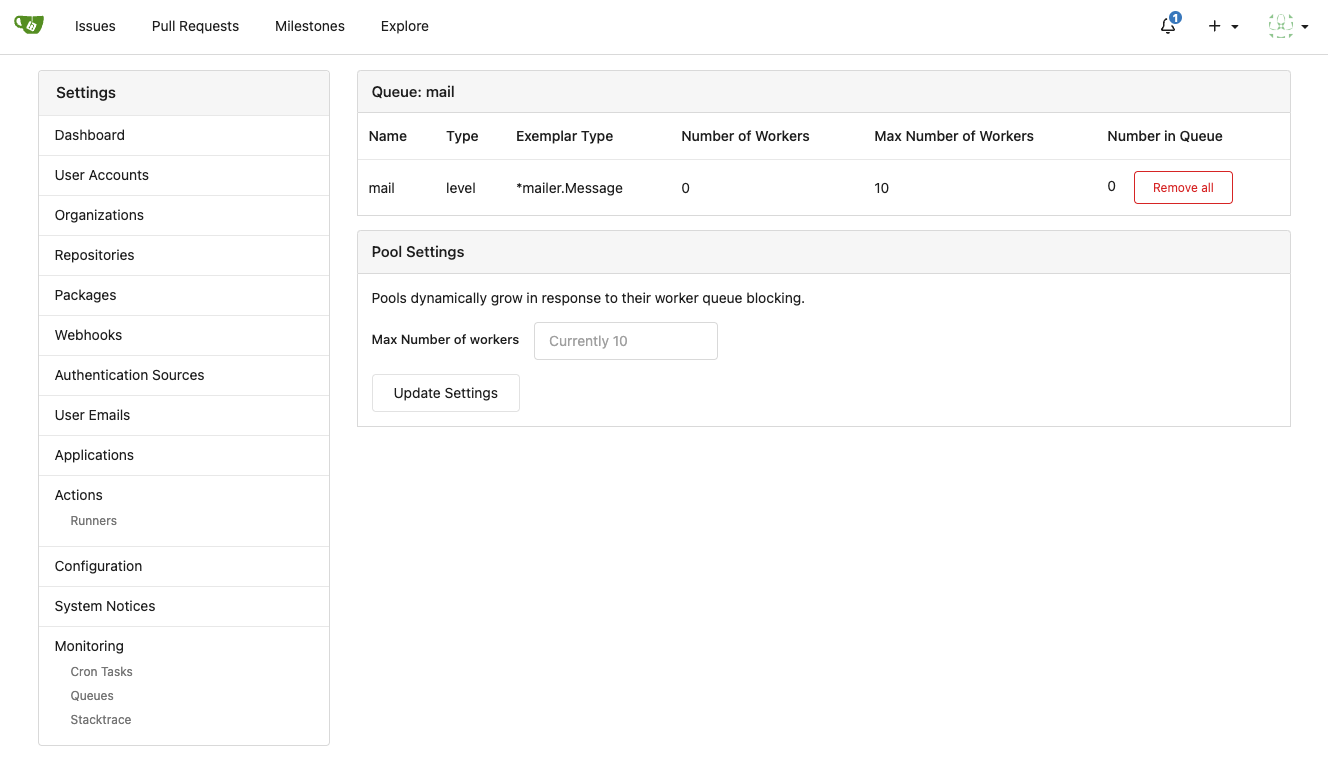
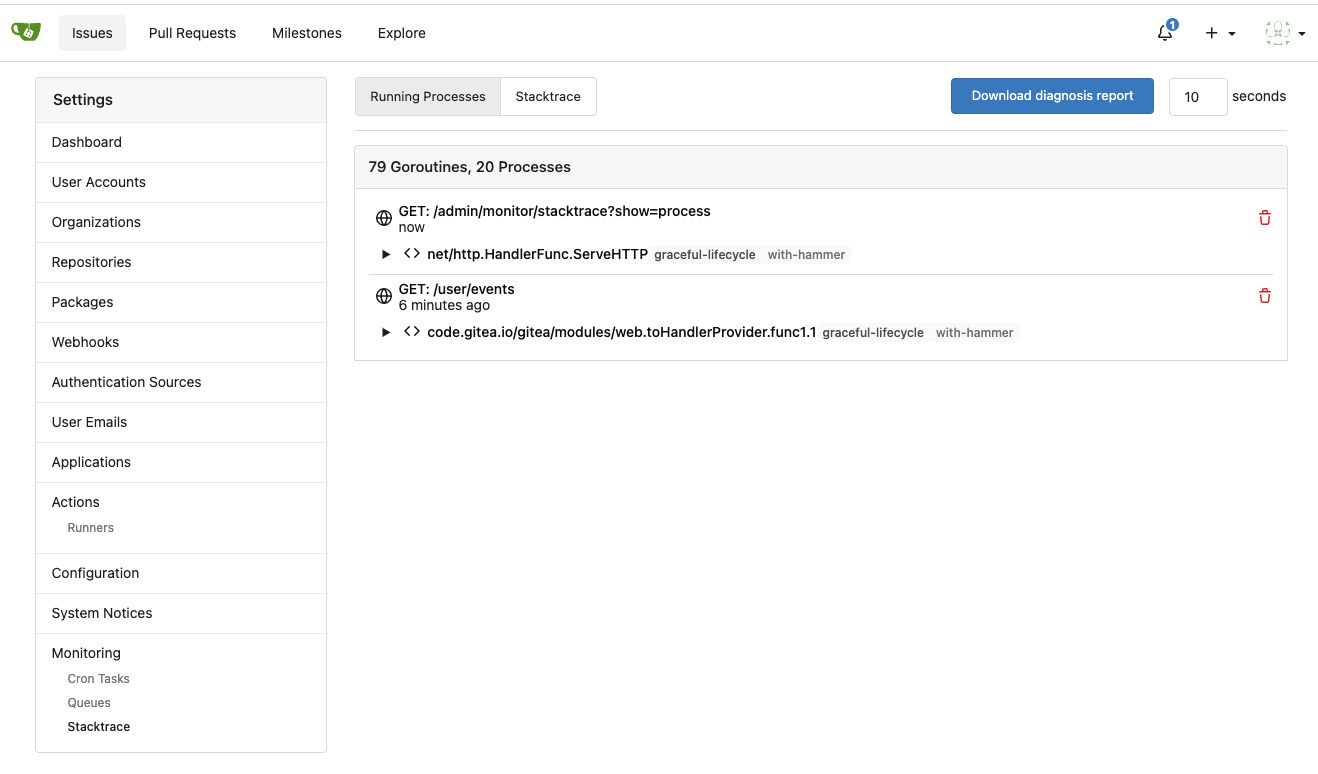

---------
Co-authored-by: Jason Song <i@wolfogre.com>
Co-authored-by: Giteabot <teabot@gitea.io>
2023-05-11 03:45:47 -04:00
|
|
|
if !q.isUnique {
|
|
|
|
|
return false, nil
|
|
|
|
|
}
|
2025-10-30 21:12:36 -04:00
|
|
|
q.mu.Lock()
|
|
|
|
|
defer q.mu.Unlock()
|
Rewrite queue (#24505)
# ⚠️ Breaking
Many deprecated queue config options are removed (actually, they should
have been removed in 1.18/1.19).
If you see the fatal message when starting Gitea: "Please update your
app.ini to remove deprecated config options", please follow the error
messages to remove these options from your app.ini.
Example:
```
2023/05/06 19:39:22 [E] Removed queue option: `[indexer].ISSUE_INDEXER_QUEUE_TYPE`. Use new options in `[queue.issue_indexer]`
2023/05/06 19:39:22 [E] Removed queue option: `[indexer].UPDATE_BUFFER_LEN`. Use new options in `[queue.issue_indexer]`
2023/05/06 19:39:22 [F] Please update your app.ini to remove deprecated config options
```
Many options in `[queue]` are are dropped, including:
`WRAP_IF_NECESSARY`, `MAX_ATTEMPTS`, `TIMEOUT`, `WORKERS`,
`BLOCK_TIMEOUT`, `BOOST_TIMEOUT`, `BOOST_WORKERS`, they can be removed
from app.ini.
# The problem
The old queue package has some legacy problems:
* complexity: I doubt few people could tell how it works.
* maintainability: Too many channels and mutex/cond are mixed together,
too many different structs/interfaces depends each other.
* stability: due to the complexity & maintainability, sometimes there
are strange bugs and difficult to debug, and some code doesn't have test
(indeed some code is difficult to test because a lot of things are mixed
together).
* general applicability: although it is called "queue", its behavior is
not a well-known queue.
* scalability: it doesn't seem easy to make it work with a cluster
without breaking its behaviors.
It came from some very old code to "avoid breaking", however, its
technical debt is too heavy now. It's a good time to introduce a better
"queue" package.
# The new queue package
It keeps using old config and concept as much as possible.
* It only contains two major kinds of concepts:
* The "base queue": channel, levelqueue, redis
* They have the same abstraction, the same interface, and they are
tested by the same testing code.
* The "WokerPoolQueue", it uses the "base queue" to provide "worker
pool" function, calls the "handler" to process the data in the base
queue.
* The new code doesn't do "PushBack"
* Think about a queue with many workers, the "PushBack" can't guarantee
the order for re-queued unhandled items, so in new code it just does
"normal push"
* The new code doesn't do "pause/resume"
* The "pause/resume" was designed to handle some handler's failure: eg:
document indexer (elasticsearch) is down
* If a queue is paused for long time, either the producers blocks or the
new items are dropped.
* The new code doesn't do such "pause/resume" trick, it's not a common
queue's behavior and it doesn't help much.
* If there are unhandled items, the "push" function just blocks for a
few seconds and then re-queue them and retry.
* The new code doesn't do "worker booster"
* Gitea's queue's handlers are light functions, the cost is only the
go-routine, so it doesn't make sense to "boost" them.
* The new code only use "max worker number" to limit the concurrent
workers.
* The new "Push" never blocks forever
* Instead of creating more and more blocking goroutines, return an error
is more friendly to the server and to the end user.
There are more details in code comments: eg: the "Flush" problem, the
strange "code.index" hanging problem, the "immediate" queue problem.
Almost ready for review.
TODO:
* [x] add some necessary comments during review
* [x] add some more tests if necessary
* [x] update documents and config options
* [x] test max worker / active worker
* [x] re-run the CI tasks to see whether any test is flaky
* [x] improve the `handleOldLengthConfiguration` to provide more
friendly messages
* [x] fine tune default config values (eg: length?)
## Code coverage:

2023-05-08 07:49:59 -04:00
|
|
|
return q.set.Contains(string(data)), nil
|
|
|
|
|
}
|
|
|
|
|
|
|
|
|
|
func (q *baseChannel) Len(ctx context.Context) (int, error) {
|
|
|
|
|
if q.c == nil {
|
|
|
|
|
return 0, errChannelClosed
|
|
|
|
|
}
|
|
|
|
|
|
|
|
|
|
return len(q.c), nil
|
|
|
|
|
}
|
|
|
|
|
|
|
|
|
|
func (q *baseChannel) Close() error {
|
|
|
|
|
q.mu.Lock()
|
|
|
|
|
defer q.mu.Unlock()
|
|
|
|
|
|
|
|
|
|
close(q.c)
|
Improve queue & process & stacktrace (#24636)
Although some features are mixed together in this PR, this PR is not
that large, and these features are all related.
Actually there are more than 70 lines are for a toy "test queue", so
this PR is quite simple.
Major features:
1. Allow site admin to clear a queue (remove all items in a queue)
* Because there is no transaction, the "unique queue" could be corrupted
in rare cases, that's unfixable.
* eg: the item is in the "set" but not in the "list", so the item would
never be able to be pushed into the queue.
* Now site admin could simply clear the queue, then everything becomes
correct, the lost items could be re-pushed into queue by future
operations.
3. Split the "admin/monitor" to separate pages
4. Allow to download diagnosis report
* In history, there were many users reporting that Gitea queue gets
stuck, or Gitea's CPU is 100%
* With diagnosis report, maintainers could know what happens clearly
The diagnosis report sample:
[gitea-diagnosis-20230510-192913.zip](https://github.com/go-gitea/gitea/files/11441346/gitea-diagnosis-20230510-192913.zip)
, use "go tool pprof profile.dat" to view the report.
Screenshots:



---------
Co-authored-by: Jason Song <i@wolfogre.com>
Co-authored-by: Giteabot <teabot@gitea.io>
2023-05-11 03:45:47 -04:00
|
|
|
if q.isUnique {
|
|
|
|
|
q.set = container.Set[string]{}
|
|
|
|
|
}
|
Rewrite queue (#24505)
# ⚠️ Breaking
Many deprecated queue config options are removed (actually, they should
have been removed in 1.18/1.19).
If you see the fatal message when starting Gitea: "Please update your
app.ini to remove deprecated config options", please follow the error
messages to remove these options from your app.ini.
Example:
```
2023/05/06 19:39:22 [E] Removed queue option: `[indexer].ISSUE_INDEXER_QUEUE_TYPE`. Use new options in `[queue.issue_indexer]`
2023/05/06 19:39:22 [E] Removed queue option: `[indexer].UPDATE_BUFFER_LEN`. Use new options in `[queue.issue_indexer]`
2023/05/06 19:39:22 [F] Please update your app.ini to remove deprecated config options
```
Many options in `[queue]` are are dropped, including:
`WRAP_IF_NECESSARY`, `MAX_ATTEMPTS`, `TIMEOUT`, `WORKERS`,
`BLOCK_TIMEOUT`, `BOOST_TIMEOUT`, `BOOST_WORKERS`, they can be removed
from app.ini.
# The problem
The old queue package has some legacy problems:
* complexity: I doubt few people could tell how it works.
* maintainability: Too many channels and mutex/cond are mixed together,
too many different structs/interfaces depends each other.
* stability: due to the complexity & maintainability, sometimes there
are strange bugs and difficult to debug, and some code doesn't have test
(indeed some code is difficult to test because a lot of things are mixed
together).
* general applicability: although it is called "queue", its behavior is
not a well-known queue.
* scalability: it doesn't seem easy to make it work with a cluster
without breaking its behaviors.
It came from some very old code to "avoid breaking", however, its
technical debt is too heavy now. It's a good time to introduce a better
"queue" package.
# The new queue package
It keeps using old config and concept as much as possible.
* It only contains two major kinds of concepts:
* The "base queue": channel, levelqueue, redis
* They have the same abstraction, the same interface, and they are
tested by the same testing code.
* The "WokerPoolQueue", it uses the "base queue" to provide "worker
pool" function, calls the "handler" to process the data in the base
queue.
* The new code doesn't do "PushBack"
* Think about a queue with many workers, the "PushBack" can't guarantee
the order for re-queued unhandled items, so in new code it just does
"normal push"
* The new code doesn't do "pause/resume"
* The "pause/resume" was designed to handle some handler's failure: eg:
document indexer (elasticsearch) is down
* If a queue is paused for long time, either the producers blocks or the
new items are dropped.
* The new code doesn't do such "pause/resume" trick, it's not a common
queue's behavior and it doesn't help much.
* If there are unhandled items, the "push" function just blocks for a
few seconds and then re-queue them and retry.
* The new code doesn't do "worker booster"
* Gitea's queue's handlers are light functions, the cost is only the
go-routine, so it doesn't make sense to "boost" them.
* The new code only use "max worker number" to limit the concurrent
workers.
* The new "Push" never blocks forever
* Instead of creating more and more blocking goroutines, return an error
is more friendly to the server and to the end user.
There are more details in code comments: eg: the "Flush" problem, the
strange "code.index" hanging problem, the "immediate" queue problem.
Almost ready for review.
TODO:
* [x] add some necessary comments during review
* [x] add some more tests if necessary
* [x] update documents and config options
* [x] test max worker / active worker
* [x] re-run the CI tasks to see whether any test is flaky
* [x] improve the `handleOldLengthConfiguration` to provide more
friendly messages
* [x] fine tune default config values (eg: length?)
## Code coverage:

2023-05-08 07:49:59 -04:00
|
|
|
|
|
|
|
|
return nil
|
|
|
|
|
}
|
|
|
|
|
|
|
|
|
|
func (q *baseChannel) RemoveAll(ctx context.Context) error {
|
|
|
|
|
q.mu.Lock()
|
|
|
|
|
defer q.mu.Unlock()
|
|
|
|
|
|
2024-08-14 05:43:42 -04:00
|
|
|
for len(q.c) > 0 {
|
Rewrite queue (#24505)
# ⚠️ Breaking
Many deprecated queue config options are removed (actually, they should
have been removed in 1.18/1.19).
If you see the fatal message when starting Gitea: "Please update your
app.ini to remove deprecated config options", please follow the error
messages to remove these options from your app.ini.
Example:
```
2023/05/06 19:39:22 [E] Removed queue option: `[indexer].ISSUE_INDEXER_QUEUE_TYPE`. Use new options in `[queue.issue_indexer]`
2023/05/06 19:39:22 [E] Removed queue option: `[indexer].UPDATE_BUFFER_LEN`. Use new options in `[queue.issue_indexer]`
2023/05/06 19:39:22 [F] Please update your app.ini to remove deprecated config options
```
Many options in `[queue]` are are dropped, including:
`WRAP_IF_NECESSARY`, `MAX_ATTEMPTS`, `TIMEOUT`, `WORKERS`,
`BLOCK_TIMEOUT`, `BOOST_TIMEOUT`, `BOOST_WORKERS`, they can be removed
from app.ini.
# The problem
The old queue package has some legacy problems:
* complexity: I doubt few people could tell how it works.
* maintainability: Too many channels and mutex/cond are mixed together,
too many different structs/interfaces depends each other.
* stability: due to the complexity & maintainability, sometimes there
are strange bugs and difficult to debug, and some code doesn't have test
(indeed some code is difficult to test because a lot of things are mixed
together).
* general applicability: although it is called "queue", its behavior is
not a well-known queue.
* scalability: it doesn't seem easy to make it work with a cluster
without breaking its behaviors.
It came from some very old code to "avoid breaking", however, its
technical debt is too heavy now. It's a good time to introduce a better
"queue" package.
# The new queue package
It keeps using old config and concept as much as possible.
* It only contains two major kinds of concepts:
* The "base queue": channel, levelqueue, redis
* They have the same abstraction, the same interface, and they are
tested by the same testing code.
* The "WokerPoolQueue", it uses the "base queue" to provide "worker
pool" function, calls the "handler" to process the data in the base
queue.
* The new code doesn't do "PushBack"
* Think about a queue with many workers, the "PushBack" can't guarantee
the order for re-queued unhandled items, so in new code it just does
"normal push"
* The new code doesn't do "pause/resume"
* The "pause/resume" was designed to handle some handler's failure: eg:
document indexer (elasticsearch) is down
* If a queue is paused for long time, either the producers blocks or the
new items are dropped.
* The new code doesn't do such "pause/resume" trick, it's not a common
queue's behavior and it doesn't help much.
* If there are unhandled items, the "push" function just blocks for a
few seconds and then re-queue them and retry.
* The new code doesn't do "worker booster"
* Gitea's queue's handlers are light functions, the cost is only the
go-routine, so it doesn't make sense to "boost" them.
* The new code only use "max worker number" to limit the concurrent
workers.
* The new "Push" never blocks forever
* Instead of creating more and more blocking goroutines, return an error
is more friendly to the server and to the end user.
There are more details in code comments: eg: the "Flush" problem, the
strange "code.index" hanging problem, the "immediate" queue problem.
Almost ready for review.
TODO:
* [x] add some necessary comments during review
* [x] add some more tests if necessary
* [x] update documents and config options
* [x] test max worker / active worker
* [x] re-run the CI tasks to see whether any test is flaky
* [x] improve the `handleOldLengthConfiguration` to provide more
friendly messages
* [x] fine tune default config values (eg: length?)
## Code coverage:

2023-05-08 07:49:59 -04:00
|
|
|
<-q.c
|
|
|
|
|
}
|
Improve queue & process & stacktrace (#24636)
Although some features are mixed together in this PR, this PR is not
that large, and these features are all related.
Actually there are more than 70 lines are for a toy "test queue", so
this PR is quite simple.
Major features:
1. Allow site admin to clear a queue (remove all items in a queue)
* Because there is no transaction, the "unique queue" could be corrupted
in rare cases, that's unfixable.
* eg: the item is in the "set" but not in the "list", so the item would
never be able to be pushed into the queue.
* Now site admin could simply clear the queue, then everything becomes
correct, the lost items could be re-pushed into queue by future
operations.
3. Split the "admin/monitor" to separate pages
4. Allow to download diagnosis report
* In history, there were many users reporting that Gitea queue gets
stuck, or Gitea's CPU is 100%
* With diagnosis report, maintainers could know what happens clearly
The diagnosis report sample:
[gitea-diagnosis-20230510-192913.zip](https://github.com/go-gitea/gitea/files/11441346/gitea-diagnosis-20230510-192913.zip)
, use "go tool pprof profile.dat" to view the report.
Screenshots:



---------
Co-authored-by: Jason Song <i@wolfogre.com>
Co-authored-by: Giteabot <teabot@gitea.io>
2023-05-11 03:45:47 -04:00
|
|
|
|
|
|
|
|
if q.isUnique {
|
|
|
|
|
q.set = container.Set[string]{}
|
|
|
|
|
}
|
Rewrite queue (#24505)
# ⚠️ Breaking
Many deprecated queue config options are removed (actually, they should
have been removed in 1.18/1.19).
If you see the fatal message when starting Gitea: "Please update your
app.ini to remove deprecated config options", please follow the error
messages to remove these options from your app.ini.
Example:
```
2023/05/06 19:39:22 [E] Removed queue option: `[indexer].ISSUE_INDEXER_QUEUE_TYPE`. Use new options in `[queue.issue_indexer]`
2023/05/06 19:39:22 [E] Removed queue option: `[indexer].UPDATE_BUFFER_LEN`. Use new options in `[queue.issue_indexer]`
2023/05/06 19:39:22 [F] Please update your app.ini to remove deprecated config options
```
Many options in `[queue]` are are dropped, including:
`WRAP_IF_NECESSARY`, `MAX_ATTEMPTS`, `TIMEOUT`, `WORKERS`,
`BLOCK_TIMEOUT`, `BOOST_TIMEOUT`, `BOOST_WORKERS`, they can be removed
from app.ini.
# The problem
The old queue package has some legacy problems:
* complexity: I doubt few people could tell how it works.
* maintainability: Too many channels and mutex/cond are mixed together,
too many different structs/interfaces depends each other.
* stability: due to the complexity & maintainability, sometimes there
are strange bugs and difficult to debug, and some code doesn't have test
(indeed some code is difficult to test because a lot of things are mixed
together).
* general applicability: although it is called "queue", its behavior is
not a well-known queue.
* scalability: it doesn't seem easy to make it work with a cluster
without breaking its behaviors.
It came from some very old code to "avoid breaking", however, its
technical debt is too heavy now. It's a good time to introduce a better
"queue" package.
# The new queue package
It keeps using old config and concept as much as possible.
* It only contains two major kinds of concepts:
* The "base queue": channel, levelqueue, redis
* They have the same abstraction, the same interface, and they are
tested by the same testing code.
* The "WokerPoolQueue", it uses the "base queue" to provide "worker
pool" function, calls the "handler" to process the data in the base
queue.
* The new code doesn't do "PushBack"
* Think about a queue with many workers, the "PushBack" can't guarantee
the order for re-queued unhandled items, so in new code it just does
"normal push"
* The new code doesn't do "pause/resume"
* The "pause/resume" was designed to handle some handler's failure: eg:
document indexer (elasticsearch) is down
* If a queue is paused for long time, either the producers blocks or the
new items are dropped.
* The new code doesn't do such "pause/resume" trick, it's not a common
queue's behavior and it doesn't help much.
* If there are unhandled items, the "push" function just blocks for a
few seconds and then re-queue them and retry.
* The new code doesn't do "worker booster"
* Gitea's queue's handlers are light functions, the cost is only the
go-routine, so it doesn't make sense to "boost" them.
* The new code only use "max worker number" to limit the concurrent
workers.
* The new "Push" never blocks forever
* Instead of creating more and more blocking goroutines, return an error
is more friendly to the server and to the end user.
There are more details in code comments: eg: the "Flush" problem, the
strange "code.index" hanging problem, the "immediate" queue problem.
Almost ready for review.
TODO:
* [x] add some necessary comments during review
* [x] add some more tests if necessary
* [x] update documents and config options
* [x] test max worker / active worker
* [x] re-run the CI tasks to see whether any test is flaky
* [x] improve the `handleOldLengthConfiguration` to provide more
friendly messages
* [x] fine tune default config values (eg: length?)
## Code coverage:

2023-05-08 07:49:59 -04:00
|
|
|
return nil
|
|
|
|
|
}
|

